

Through Tender Transitions...
How generational wisdom can help nourish new mothers, sorely in need of TLC


Kalimera one and all,
I write to you way past my due date but conversely, in advance of it, in that I’m scheduling these posts in before baby is due so that you can still get your fill of matriarchal wisdom while I’m caring for the new member of our family.
With this in mind, I really wanted to take a moment to talk about how important it is to nourish and care for the new generation of mothers out there. There’s so much to be said about this but I want to focus on the wisdom passed down through generations and why it’s so important to listen to it.
Below, I’m sharing my Doula friend
’s expert insights into this tender, liminal period in a woman’s life as well as a very tasty postpartum, traditional Congee (Chinese Rice Porridge) recipe, passed down to Chi San from the matriarchs in her family. She has drawn on her own Chinese lineage as part of her practice as a Doula and has a knowledge that has been passed down to her by countless generations of women that came before her. So much of what she has to say rings true to me.
Scroll down also for my top reads for anyone entering into motherhood - from poetry to cookbooks that will nurture and nourish. When I have friends entering into Matrescence, I buy them one of these books.
Having travelled all over the world to cook with grandmothers over the past decade, I’ve gleaned more than just recipes. Wisdom has flowed from these women as we cook in their kitchen and something that has come up again and again is how we take care of new mothers.
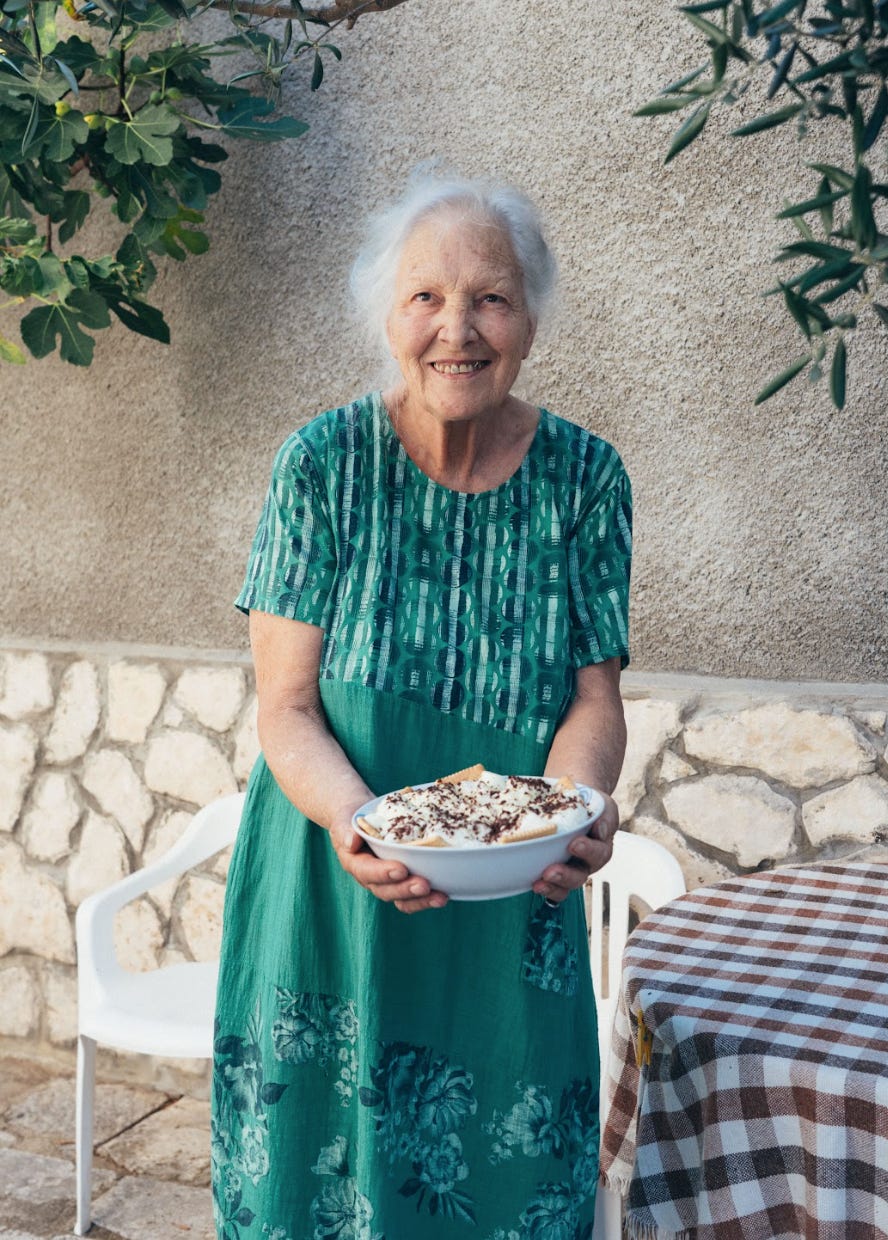
In Croatia, as part of the research for my latest book Mediterranea, I cooked with octogenarian Maja at her home by the coast of Sibenik. As part of the meal we prepared together, she made a dessert of ‘floating islands’ - whipped clouds of meringue floating in a sea of sweet custard - which she told me was traditionally made for women in Croatia postpartum, to warm, soothe and sweeten the pain and trauma of birth.
Elsewhere in Mexico, grandmother Bety told me that it was traditional to rest up for forty days post birth, with other women in the household or else in the neighbourhood attending the new mother with warm soups, broths and stews.
This forty days protocol is also observed here in Greece. My own Yiayia and all her sisters remained at home for the first month or so when they gave birth to their children, each of them attending to the other when it came to their turn to birth and nurture their newborns. Nowadays however, the focus here in Greece has become less about the mother recovering and increasingly on the child not coming into contact with germs. Visitors tend to pour in and attention goes to the newborn rather than the mother going through one of the biggest transitions and physical changes of her life.
After I gave birth to my first daughter, Calypso, at home here in Athens, surrounded by a team of brilliantly supportive midwives (not a male doctor in sight!) I felt so held. They attended me for a month after the birth, chastising my man if they ever saw I was dehydrated or looking tired or even if they saw me attempting to lift something heavier than the baby.
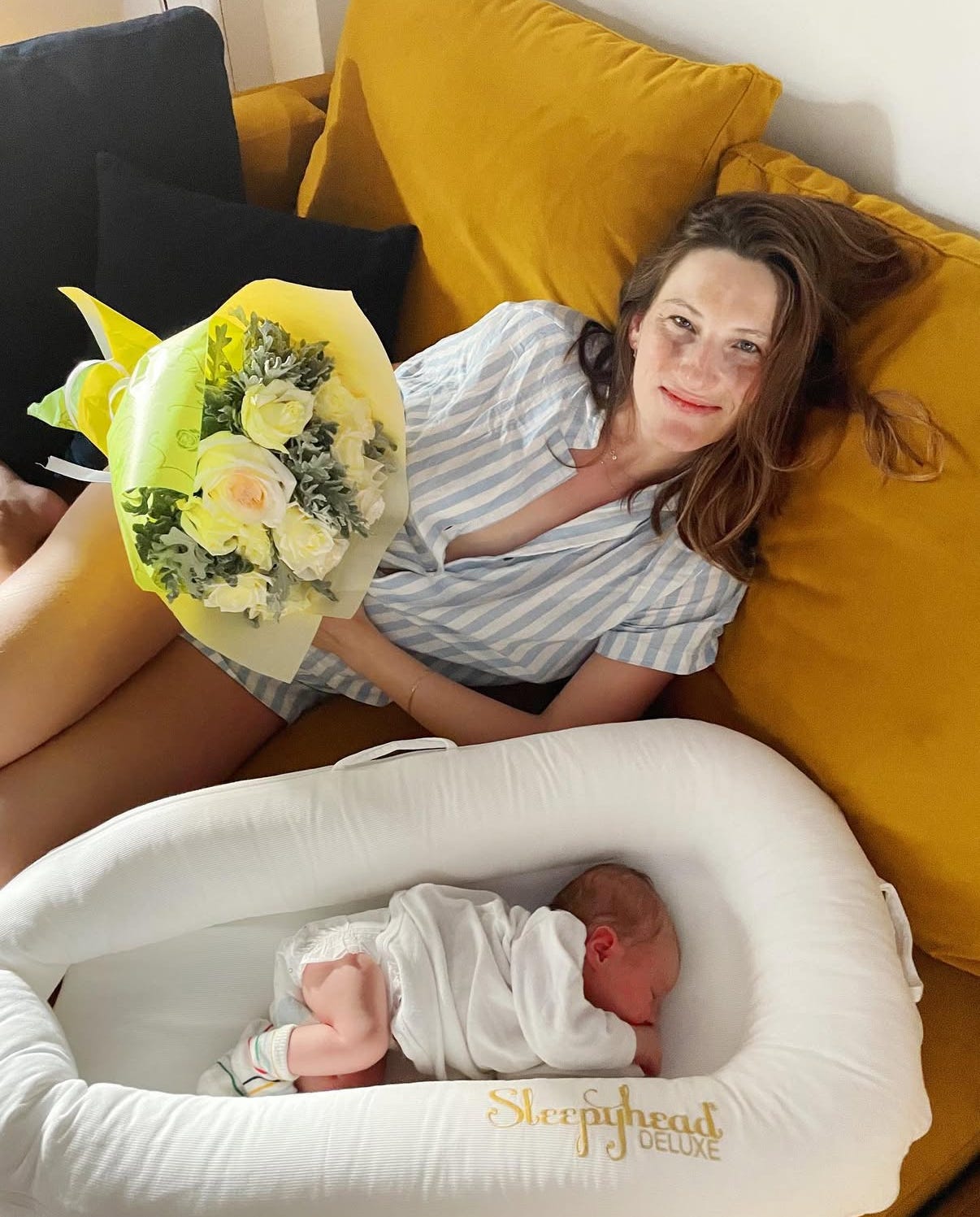
Every time these women visited (three times a week for the first month) I felt like a queen. Of course I was exhausted but I look back on the first month with Calypso as a time of security and safety. As Chi San mentions below, we welcomed very few guests and I didn’t leave the house with her for weeks, because she was so tiny and I wasn’t quite ready to face the world as the new person I had become. Almost in a Chrysalis of my own making, I needed time to emerge with my new wings outstretched and shining.
I don’t have a great relationship with my own mother and was warned that the postpartum period would be one in which support from a mother figure would be needed. Well aware of the history of postpartum depression in my own family, I’ve been determined in both pregnancies to prepare for this tender period, trying to mirror my Yiayia and her village with my own little community of women here in Athens.
 | A guest post by
|